
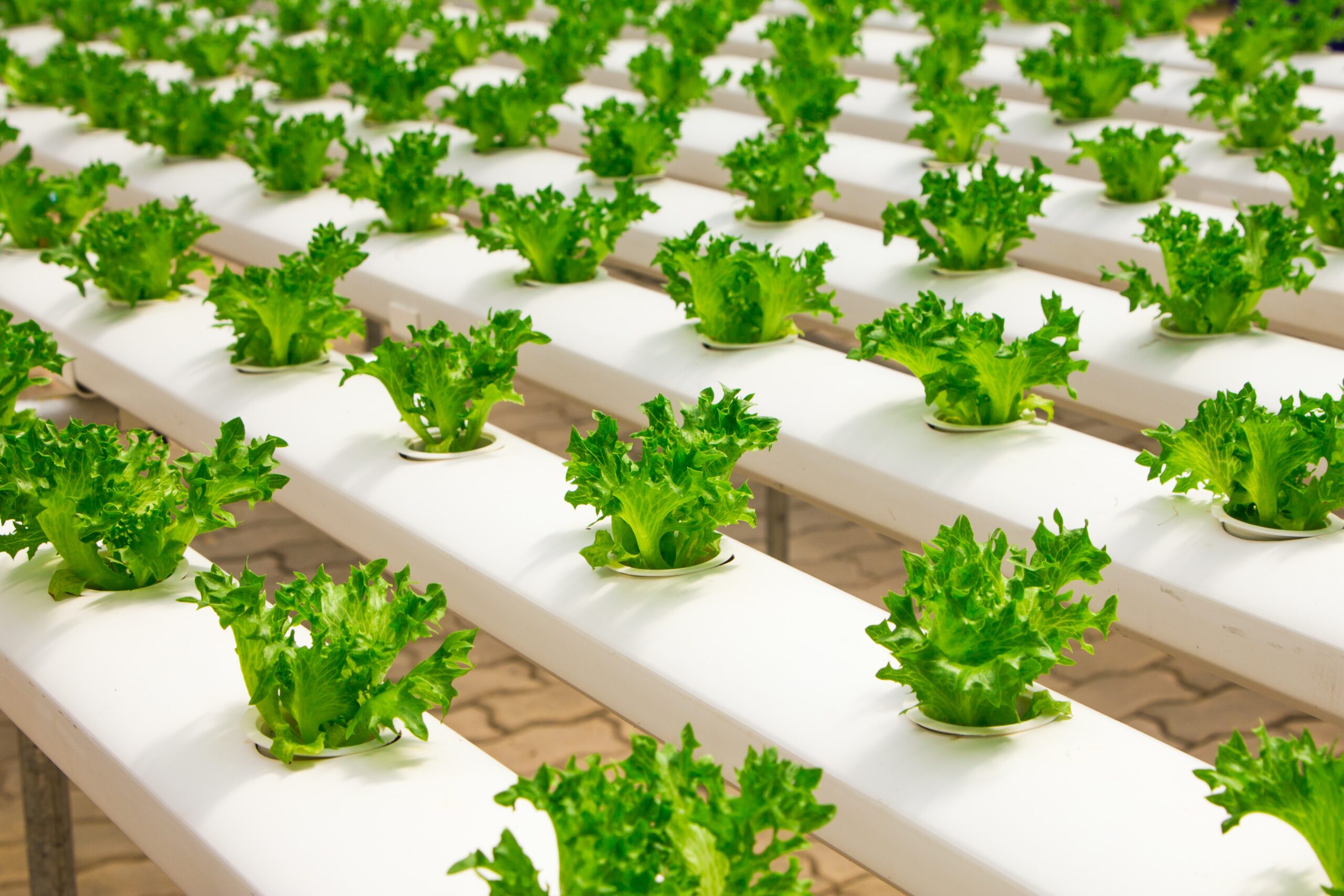
“Solving” Farming
Farming is a central, and sometimes forgotten part of human civilization. It is through farming that we produce enough edible calories to sustain a multi-billion population.
It is also one of the main causes of biodiversity losses, pollution, and a major contributor to climate change. So farming, and the methods needed for sustainable farming, have been at the center of a heated debate for a while now.
Only one thing is certain, the current paradigm of industrial farming around tractors, fertilizers, pesticide, herbicides, fungicides, etc… needs to change. Especially as the area of agricultural land in the world is decreasing by 23 hectares every minute and the population of the Earth is growing at a rate of 5.5 million inhabitants per month.
On one hand, methods like permaculture, agroforestry, organic farming, and regenerative practices could be enough to solve the problem.
On the other hand, technology will help. We already partially covered how “Investors Should Take Note: Robots Are Taking Over Farming”.
But what if technology could change farming even more? Not to replace tractors or remove the need for herbicides with robots. What if instead, it gave up the need for outdoor skies and soil entirely?
Vertical Farming
Long confined to the realm of science fiction, vertical farming has become a reality in the last decade. The scaling up of this technology came from a few decades of scientific experiments, hobby trials, and niche use cases for indoor farming. But it is only recently that the idea of large-scale indoor farming has become viable.
In 2020, the Financial Times was asking “Vertical farming: hope or hype?“. This was because an onslaught of ambitious new startups was launching in this segment, with plenty of funding to come with it. The idea was that farming could become more efficient, less polluting, less energy intensive, and overall more “green”.
The vertical farming market was $5.6B in 2022 and is projected to grow to $35B by 2032. Which of course would still leave most of the 12.2 trillion agricultural market staying in conventional farming. With a target market in the trillions, this leaves a lot of room for vertical farming to grow.
A False Start?
After a lot of hype, some reality was bound to set in. An energy crisis, a banking crisis, and a drying up of investment in tech later, “Vertical farming is headed for the ‘trough of disillusionment.” Plenty of companies are closing down or down scaling their operations.
So is it over, or at least, what must change?
A Capital Intensive Business
What makes vertical farming potentially viable today are the much-reduced costs of automation like sensors, automatic LED lightning, etc… But a vertical farm is still very capital-intensive to build. Companies whose business model planned for always abundant and cheap capital were in for a bad surprise when the business and credit cycle turned.
Farming Is Not Software
A decade of hypergrowth has gotten entrepreneurs, VC, and financial markets used to aggressive targets and explosive growth. But this hardly fits the time schedule needed to change consumers’ habits, breed new varieties of plants or build farms equivalent to thousands of hectares of arable lands. “You can’t sit in a Starbucks and run your farm.”
Lack Of Experienced Operators
Half of the vertical farming operators in 2022 had no farming experience and went for shiny new technology over experience and cautious testing. Combine with a “moving fast” mindset inherited from the tech sector, this led to many errors and wasting capital building “some of the most expensive per acre on Earth”.
Overselling & Cost Control
Too many newcomers in the industry hype it so much that reality was certain to disappoint. After all, 70% of farming operators agreed that CEA is “susceptible to excessive greenwashing.” More realistic expectations than replacing the whole farming industry in a few years will also help set better business models.
“Presenting vertical farming as a panacea — “vertical farming will feed the world” — is an easier sell to journalists and investors than admitting that it’s a small but important part of the future of agriculture.” Henry Gordon-Smith – CEO at Agritecture, an urban farming consultancy based in New York.
The Future Of Vertical Farming
It would be a mistake to believe vertical farming to be a stillborn idea, unable to work in real life. But like any radically new technology, it will need to get started somewhere and improve gradually.
Overall, the industry is getting more mature and will from now on follow the advice heralded at a recent Indoor Ag Conference “How not to fail in vertical farming: ‘Be on guard for hubris” & “Technology is a means, not an end’ in farming”.
And not all vertical farming businesses are struggling. For example, privately held Oishii in Japan, whose co-founder and CEO Hiroki Koga says the company is doing “better than ever.”
So let’s look at some vertical farming stocks that are likely to thrive despite the recent downturn.
Top 5 Vertical Farming Stock
(This stock list is ordered by market capitalization at the time of writing of this article, and the selection has been done following a subjective assessment of the technology and financial situation of the related companies)
GrowGeneration Corp. (GRWG)
GrowGeneration is the largest hydroponic products retailer in the US. It sells for both home growing and commercial scale facilities. It also has a large and recognized education resource center for hydroponic cultivation.

Source: Grow Generation

Source: Grow Generation
The down cycle in vertical farming and cannabis has shrunk sales by 34% in 2022, causing net losses of $163M. The net loss was largely due to a large impairment charge of $127M, reflecting slow-moving inventory.
Cash flows are looking better, with a cash balance essentially unchanged at the end of 2022, despite investing $11.5M in growth.
GrowGeneration’s profit should come back up as soon as the operational and profit issue of the cannabis market and vertical farming companies are over. In the meantime, a stable cash balance and solid balance sheet should keep.
AppHarvest, Inc. (APPH)

The Appalachian company is operating some of the world’s largest high-tech indoor farms, reducing water demand by 90% and land needs by 30x. It is focused on vine crops (tomatoes, cucumber, peppers) and leafy greens (lettuce, spinach, and other salads). It has a distribution agreement with Mastronardi, allowing it to reach most grocery chains like Costco, Walmart, Target, Kroger, Aldi, etc…

Source: AppHarvest
The company operates 165 acres in Kentucky, with 240 acres identified as potential expansions. The company is still ramping up and is not profitable yet, with an adjusted EBITDA in 2022 of -$72M, a net loss of $176M, and a similar 2023 forward outlook. The company’s management expects a positive adjusted gross profit in 2024 and a positive EBITDA in 2026.
Considering the predicted financial losses until 2026, AppHarvest could be at risk of bankruptcy if it fails to raise more money. So investors will want to be cautious and keep an eye on the company’s liquidity situation.
Village Farms International, Inc. (VFF)

A sector beyond berries and salad which rely heavily on indoor farming is cannabis cultivation. The sector has been prone to a very rapid and brutal boom and bust cycle, with the last high in 2021.
Village Farms is a veteran company in Controlled Environment Agriculture (CEA), which includes vertical farming and commercial greenhouses. The company operates a total of 545 acres of CEA facilities.

Source: Village Farms
It entered the cannabis market early in Canada in 2017 and in the USA in 2018. Its installations are estimated to be able to supply 1/3 of the total forecasted Canadian market and with an ever larger capacity by surface in Texas, also for the US market.
It also owns 12% of Altum, a platform for large-scale import of cannabidiol products to the Asia Pacific Region, and has launched its cannabis products in Germany.
A depressed cannabis market and low bulk price have put the company from a Q4 2021 net profit of $2.1M to a net loss of -$49.3M in Q4 2022.
This is an interesting stock for investors looking at both indoor farming and the cannabis sector. Village Farm’s experience with other plants also makes it a relatively safe bet from a technology standpoint.
Still, due to the refocus of the company on cannabis, its fortune and stock price might be more dependent on the cannabis market cycle than the overall vertical farming trend.
Hydrofarm Holdings Group, Inc. (HYFM)

Hydrofarm is the leading manufacturer of hydroponic cultivation systems. The company owns outright 70 brands and also distributes 80 others. It sells through a large array of retailers and distribution channels, including online and offline, B2B and B2C (including GrowGeneration already mentioned above).

Source: HydroFarm

Source: HydroFarm
Two thirds of sales are consumable products and one third durable equipment. The company has expanded sales both through organic growth and through a large acquisition in 2021. Its revenues have overall grown over time, but with a strong cyclicality, with 2022 the first down cycle since 2018.

Source: HydroFarm
The company is counting on cannabis to keep growing in the long term, and for Hydrofarm to be a successful supplier to the industry riding out the speculators and volatility:
“Like the Gold Rush, the path to stabilization is wiping out some speculators. But the surviving picks and shovels suppliers should thrive“.
Hydrofarm saw net sales decrease in 2022, compared to 2021, from $479M to $344M. This turned the 2021 net income of $13.4M into a net loss of -$285M in 2022.
Free cash flow in Q4 2022 was positive at $5.4M and is expected to stay in the green in 2023.
Hydrofarm is a stock for investors looking for a “pick and shovel” stock in the CEA market, with more exposure to consumable purchases than the capex-driven constructors like Urban-gro. And willing to take the risk of a purchase at a very cheap price, counting on a rebound by the end of 2023 or 2024.
Urban-gro, Inc. (UGRO)

The company offers turnkey solutions for indoor cultivation and vertical farming.

Source: Urban-gro
It is also active in construction (hospitals, schools, pools, etc…) and in the building of industrial facilities (brewing, food processing, oil & gas, etc…).
By integrating vertically all the various jobs and licensing required for construction, it can improve the process efficiency and speed.

Source: Urban-gro
The company is holding a significant cash balance of $12M, around 2/3 of its market capitalization, with no long-term debt. It also has a backlog of orders worth $93M, of which $30M signed in Q4 2022.
On the negative side, the company suffered from the recession in CEA markets, as well as the down-cycle of the cannabis market and some projects delayed by a few months. As a result, it registered a net loss of $15.3M in 2022.
The company will do well if capex in vertical farming and cannabis picks up. Its industrial building activity is also a buffer, as the trend of onshoring back the industry to the USA could benefit them. Considering the order backlog and cash buffer, only a prolonged economic downturn should endanger the company, making it a better option for conservative investors.
Credit: Source link

