
• About
  • Contact
  • Advertise
  • Work with WAJ
  • Privacy Policy
  • Terms of Use
  • DMCA
Tuesday, March 10, 2026
No Result
View All Result
NEWSLETTER
WorldAgJournal.com
  • US
    • Northeast
    • South
    • West
    • Midwest
    • Resources
  • WORLD
    • Africa
    • Asia
    • Canada
    • Australia
    • Europe
    • China
    • Latin America
    • Middle East
    • Russia
  • Ag Markets and Economics
    • Quotes
    • US Economics
    • World Economics
    • UN
    • Ag Politics and Policy
    • Ag Tech Investment
    • Global Trade
  • Commodities and Livestock
    • Program Crops
      • Corn
      • Cotton
      • Rice
      • Soybeans
      • Sugar
      • Wheat
    • Livestock
      • Cattle
      • Fish
      • Hogs
      • Lamb
      • Poultry
      • Sheep and Goats
    • Speciality
  • Technology and Innovation
    • Agriculture 4.0
    • Artificial Intelligence
    • Food-AgTech
    • Gene Editing
    • Hardware & Equipment
    • Indoor & Vertical farming
    • Monitoring & Growing
    • Processing Tech
    • Robotics
    • Software
    • Supply Chain
    • Traceability
    • Universities & Research
  • WAJ Original
    • Opinion
    • Management
    • News
    • Science
  • The Lifestyle
    • Sports
    • Food/Recipes
    • Properties
    • Classifieds
    • Jobs
  • US
    • Northeast
    • South
    • West
    • Midwest
    • Resources
  • WORLD
    • Africa
    • Asia
    • Canada
    • Australia
    • Europe
    • China
    • Latin America
    • Middle East
    • Russia
  • Ag Markets and Economics
    • Quotes
    • US Economics
    • World Economics
    • UN
    • Ag Politics and Policy
    • Ag Tech Investment
    • Global Trade
  • Commodities and Livestock
    • Program Crops
      • Corn
      • Cotton
      • Rice
      • Soybeans
      • Sugar
      • Wheat
    • Livestock
      • Cattle
      • Fish
      • Hogs
      • Lamb
      • Poultry
      • Sheep and Goats
    • Speciality
  • Technology and Innovation
    • Agriculture 4.0
    • Artificial Intelligence
    • Food-AgTech
    • Gene Editing
    • Hardware & Equipment
    • Indoor & Vertical farming
    • Monitoring & Growing
    • Processing Tech
    • Robotics
    • Software
    • Supply Chain
    • Traceability
    • Universities & Research
  • WAJ Original
    • Opinion
    • Management
    • News
    • Science
  • The Lifestyle
    • Sports
    • Food/Recipes
    • Properties
    • Classifieds
    • Jobs
No Result
View All Result
WorldAgJournal.com
No Result
View All Result

GMO Beans and Beyond: How Does it Work and Why Does it Matter?

by Google News
September 21, 2021
in Gene Editing, Soybeans
Reading Time: 4 mins read
A A
0
GMO Beans and Beyond: How Does it Work and Why Does it Matter?

The application of biotechnology in agriculture has resulted in many benefits to producers and consumers that tend to be overlooked or unknown by the general public. This technology has helped make both insect pest control and weed management safer and easier, while also safeguarding crops.

In terms of improved weed control, herbicide-tolerant soybeans allow the use of reduced-risk herbicides that break down more quickly in soil and are non-toxic at standard doses to wildlife and humans. Herbicide-tolerant crops are particularly compatible with no-till or reduced tillage agriculture systems that help preserve topsoil from erosion.

Producers and consumers alike are also looking for ways to be better stewards to the environment and make things safer for the farmer — it can be done with genetically modified crops — aka GMOs.
SDS
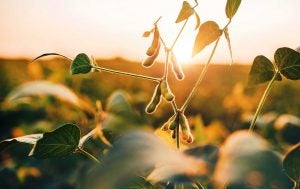
Image by Bobex-73, Shutterstock

Ever wondered about the future of soybeans and their bean relatives? Soybeans are currently the only genetically modified organism (GMO) beans commercially available in the United States, but more new technology is on the horizon! For example, Brazil is experimenting with genetic modification of pinto beans due to a devastating virus; therefore this GMO could increase pinto bean yield significantly while simultaneously decreasing waste due to contaminated crops.

In the United States, gene editing technology is on the increase versus gene modification by other methods. Modified soybeans through the gene editing method may be the new industry standard for speeding up and streamlining soybean modification and production. In addition, genetic modification could also improve the overall plant growth and nutritional profile of the food end-product.

Traditionally, soybeans have been modified with the use of transgenic technology, which is the process of transferring genes (such genes related to herbicide resistance) from one organism to another. This could be from another plant, the soil, or other natural organism. Genome editing (also known as gene editing), however, is different and seems to be more accepted by the general public. Rather than inserting new genes into the soybean’s existing genetic profile, scientists modify the genetic structure of the soybean. Genome editing allow genetic material to be added, removed, or altered at particular locations in the genome.

In some cases scientists “turn on” a section of the genome, which protects the plant from an insect!

One of the most popular methods used for gene-editing is called CRISPR (Clustered Regularly Interspaced Short Palindromic Repeats). The CRISPR protein that’s used “searches for” the appropriate gene sought by the plant breeder in the soybean and rearranges it in such a way that the soybean then carries the desired trait. This could be herbicide resistance for example, without adding in a new gene to the soybean plant. Some scientists think this could be an easier, more efficient way to modify soybeans so that they have the qualities that benefit farmers and the general population.

Genetic modification through selective farming and traditional plant cross-pollination techniques has existed for generations, but modern biotechnology has made this process easier and more efficient for modern day agricultural production. GMO crops can benefit the U.S. food supply and the safety of producers and the environment. Genetically modified soybeans make up the majority of soybeans grown in the U.S. because of their utility and versatility in the food supply. This new arising technology in gene modification makes this process even more desirable, because it can continue to accentuate advances with even greater efficiency than traditional plant breeding techniques.

What once took many years to achieve can now be done in a fraction of the time with GMO methods. One of the main focuses of agricultural biotechnology is to feed a growing world population in a more sustainable way. Some current farming methods internationally are inefficient as they require larger amounts of water, fertilizer, and pesticides. Biotechnology is “one tool in the toolbox” to solving these problems by starting at the seed level. This helps the producer and the environment and reduces the cost of products or specialty products for the consumer.

This technology has potential to revolutionize other fields beyond agriculture, including the field of medicine. For more information and agricultural biotechnology FAQs, visit the U.S. Department of Agriculture or National Institute of Food and Agriculture.

Michelle Miller, the Farm Babe, is a farmer, public speaker and writer who has worked for years with row crops, beef cattle, and sheep. She believes education is key in bridging the gap between farmers and consumers.

Sponsored Content on AGDaily


Credit: Source link

Previous Post

Enabling Policy Environment Can Have Benefits of Gene Editing for Agriculture

Next Post

An Outlook on Growth Opportunities for Global Agriculture 4.0

Next Post
An Outlook on Growth Opportunities for Global Agriculture 4.0

An Outlook on Growth Opportunities for Global Agriculture 4.0

Recommended

No Content Available
WorldAgJournal.com

Your global partner in agriculture.

What’s New Here!

  •  Agriculture Doesn’t Stop in Crop, Livestock Production
  • Pork Producers Face Longer Drives and Higher Costs
  • Michael Fields Agricultural Institute Testing New Grain

Newsletter

THE MOST IMPORTANT WORLD AG NEWS AND EVENTS IN YOUR EMAIL INBOX

  • About
  • Contact
  • Advertise
  • Work with WAJ
  • Privacy Policy
  • Terms of Use
  • DMCA

© 2021 Worldagjournal.com - Some Rights Reserved

No Result
View All Result
  • US
    • Northeast
    • South
    • West
    • Midwest
    • Resources
  • WORLD
    • Africa
    • Asia
    • Canada
    • Australia
    • Europe
    • China
    • Latin America
    • Middle East
    • Russia
  • Ag Markets and Economics
    • Quotes
    • US Economics
    • World Economics
    • UN
    • Ag Politics and Policy
    • Ag Tech Investment
    • Global Trade
  • Commodities and Livestock
    • Program Crops
      • Corn
      • Cotton
      • Rice
      • Soybeans
      • Sugar
      • Wheat
    • Livestock
      • Cattle
      • Fish
      • Hogs
      • Lamb
      • Poultry
      • Sheep and Goats
    • Speciality
  • Technology and Innovation
    • Agriculture 4.0
    • Artificial Intelligence
    • Food-AgTech
    • Gene Editing
    • Hardware & Equipment
    • Indoor & Vertical farming
    • Monitoring & Growing
    • Processing Tech
    • Robotics
    • Software
    • Supply Chain
    • Traceability
    • Universities & Research
  • WAJ Original
    • Opinion
    • Management
    • News
    • Science
  • The Lifestyle
    • Sports
    • Food/Recipes
    • Properties
    • Classifieds
    • Jobs

© 2021 Worldagjournal.com - Some Rights Reserved

Are you sure want to unlock this post?
Unlock left : 0
Are you sure want to cancel subscription?